

What am I drinking this summer?
Freshness, salinity, remarkable value, and two regions producing some of the most exciting wines in the world.
One of the questions I'm asked most often as a Master of Wine is, "What are you drinking right now?"
People are often surprised that most of my recommendations are not rare collectibles or expensive trophy wines. One Master of Wine superpower is finding extraordinary wines that punch far above their weight, significantly overdelivering for their price. This is often how I order wine in restaurants. Why pay a large restaurant markup for a famous bottle when there are so many lesser-known wines that deliver equal or greater enjoyment?
This summer, I’m doubling down on wine from two regions: Mount Etna in Sicily and Rías Baixas in Spain. Both produce remarkably food-friendly wines with freshness, salinity, character, and a strong sense of place. Better yet, many of the wines are available for under $30.
What I find most compelling is that, despite being separated by thousands of miles, the wines share a common thread. Both regions produce wines with remarkable freshness, bright acidity, and a distinctive saline character that seems to transport you straight to the sea. In this article, I share the bottles currently occupying most of my attention—including my "desert island" white wine for Summer 2026.
Mount Etna: A Volcanic Treasure
This May, I had the opportunity to return to Mount Etna for the first time in more than 20 years. While I had long been fascinated by volcanic wines, revisiting the region after such a long absence reinforced just how distinctive Etna's wines have become.
I found myself repeatedly drawn to Etna Bianco Superiore wines from the village of Milo, on Etna's eastern slopes. Milo is the only commune permitted to produce Etna Bianco Superiore and is widely regarded as the finest area for Carricante, the grape variety behind these wines. Here, Carricante combines freshness, salinity, mineral depth, and remarkable versatility at the table. At around 12.5% alcohol, Etna Bianco is noticeably lighter than many contemporary white wines, making it ideal for weekend summer lunches and warm evenings.
What I love most about Etna Bianco is its sense of place. There is a saline, mineral backbone that seems to capture both the volcanic soils of Etna and the nearby Mediterranean Sea. Every glass feels like a reminder that you are drinking a wine shaped by mountain and ocean simultaneously.
My favorite Etna producer is Benanti, a multi-generational family business based just outside Catania, with vineyards spanning several of Etna's most important growing areas. During my visit, I tasted their white wines while looking out toward the sea from the vineyards. The wines are precise, elegant, and beautifully expressive of the Carricante grape.
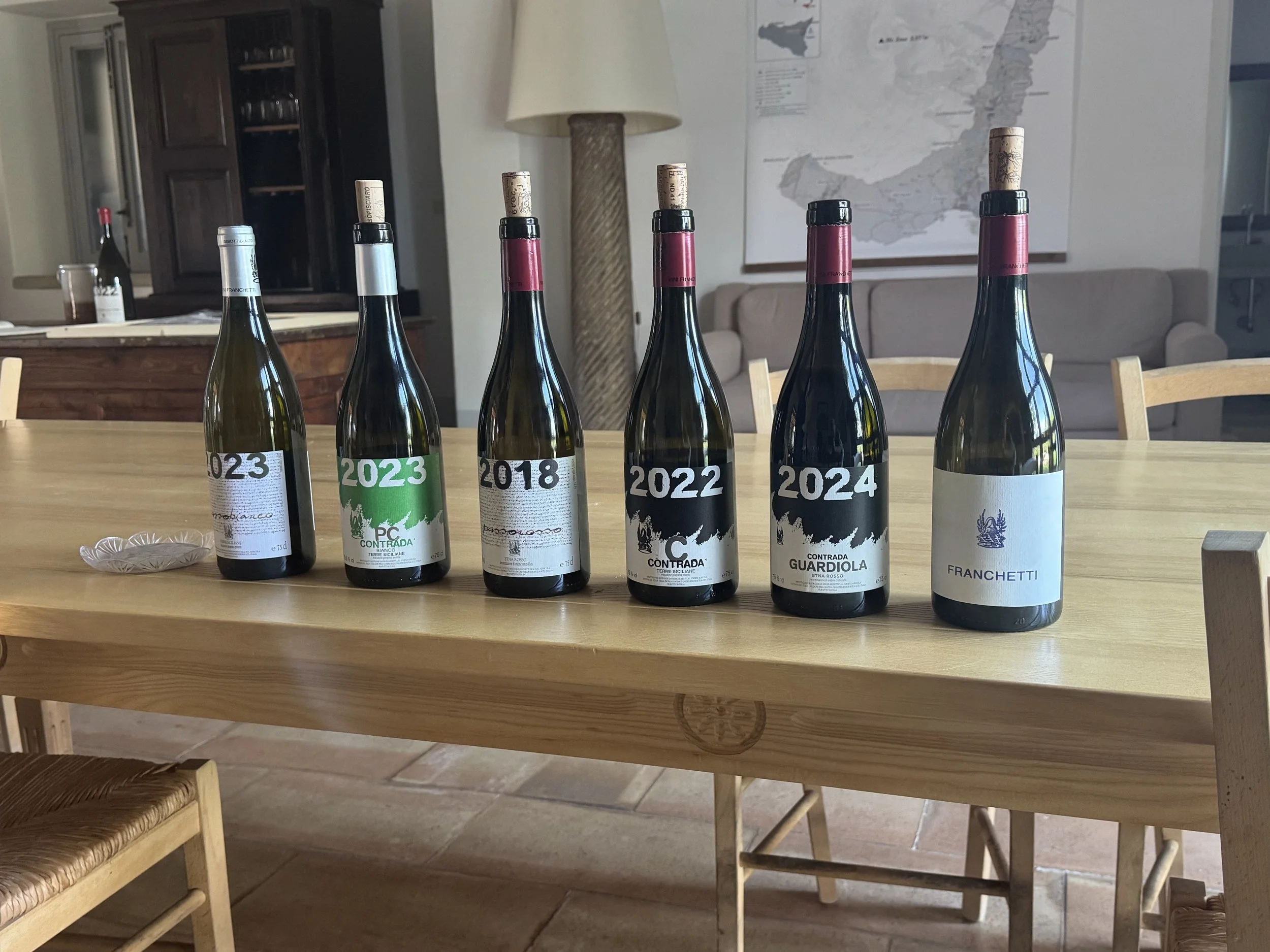
I would also encourage wine lovers to explore the Etna Biancos of Passopisciaro, the pioneering Etna estate founded by Andrea Franchetti, and Tenuta di Fessina, where Silvia Maestrelli crafts her elegant and expressive wines. These wines demonstrate the remarkable ability of Carricante to combine freshness with texture and complexity.
Etna Bianco is one of the most versatile food wines I know. It shines with oysters, clams, grilled prawns, lobster, crab, crudo, ceviche, grilled fish, and simply prepared seafood. It is equally comfortable alongside citrus-dressed salads, grilled vegetables, and Mediterranean dishes. Given that I spend my days building technology to recommend wine pairings, you might expect a more complicated answer. This summer, however, it is often simply: "Etna Bianco."
Climate Change and the Increased Importance of Vintage
One of the realities of wine today is that climate change is making vintage variation increasingly important in many regions. Historically, you could often focus primarily on producer and region. Today, the vintage can play a much larger role in determining style and quality, particularly in warmer regions.
During the summer of 2023, locals told me that the black volcanic soils on Etna became extraordinarily hot, with surface temperatures reportedly approaching 50°C (122°F) in some locations. While Etna's elevation provides an important cooling influence, extreme heat events are becoming more common and increasingly shape the character of the wines.
As a result, I am drawn to the freshness, balance, and energy of the 2022 and 2024 Etna vintages. Both showcase the brightness, salinity, and precision that first attracted me to the region's wines.
Interestingly, this contrasts with Rías Baixas, where vintage variation tends to be less pronounced. The Atlantic climate provides a moderating influence, helping preserve freshness and consistency from year to year. While there are certainly stronger and weaker vintages, I generally find that producer selection matters more than vintage selection when buying Albariño.
Rovittello, Reds, and the North Slope of Etna
The reds from Etna's northern slope are every bit as compelling as Etna's whites. Among Etna's many contrade (historic vineyard districts defined by distinct lava flows, soils, elevations, and exposures), I was particularly drawn to the reds from Rovittello and Guardiola. Both lie on the northern flank of the volcano, yet each has its own personality. Rovittello is known for its old vines and layered volcanic soils, while the higher-altitude Guardiola contrada is famed for its steep terraces and finely etched, mineral-driven wines.
I stayed at Tenuta di Fessina in Rovittello, where Silvia Maestrelli crafts her exceptional Etna Bianco and Etna Rosso, wines that capture the elegance and energy of Etna. Parts of Rovittello are home to many old, ungrafted vines growing on their original rootstocks. In most wine regions, phylloxera devastated vineyards in the nineteenth century, forcing growers to graft European vines onto resistant American rootstocks. Etna's volcanic soils, however, contain little organic matter and provide an inhospitable environment for the phylloxera louse, allowing some vineyards to survive on their own roots.
Standing among these vines feels like a direct connection to wine's past.
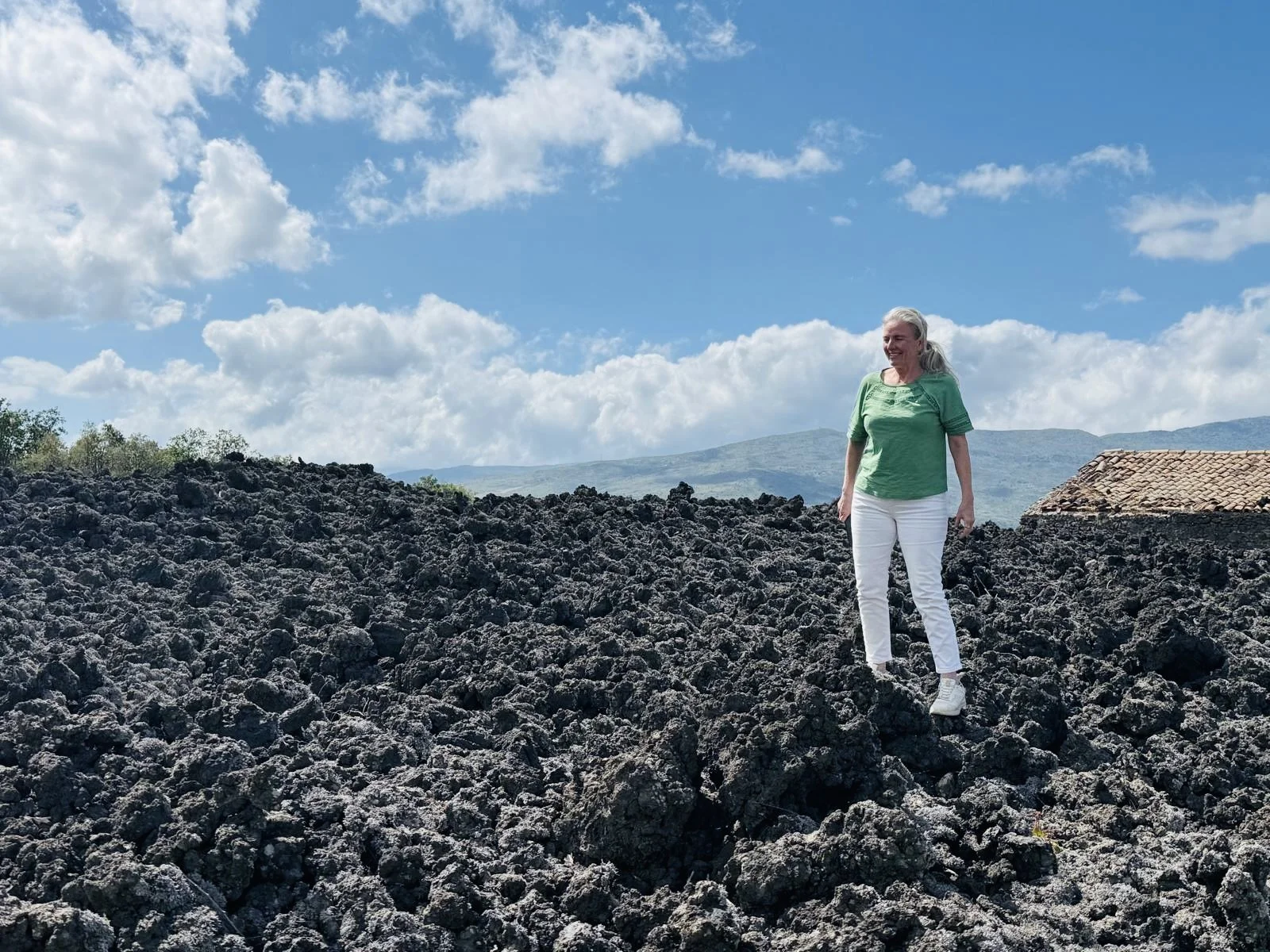
“When you scramble on the 1981 Etna lava flow, it feels crunchy, raw, and remarkably fresh—as though it hardened only weeks ago rather than 45 years ago. Few wine regions make geology, history, and viticulture feel so vividly intertwined.”
Etna Rosso combines elegance, freshness, and transparency in a way that explains why Nerello Mascalese has become one of the world's most exciting grape varieties. These are wines of energy and finesse, with flavors of red cherry, wild herbs, and volcanic earth carried by bright acidity and fine tannins—an expression of place that is unmistakably Etna.
Rías Baixas: Albariño at Its Best
The second region dominating my summer is Rías Baixas.
When I sat the Master of Wine tasting examination in 2010, one of the wines in the blind tasting lineup was an Albariño from Pazo de Señorans. Recognizing it immediately as one of my favorite wines helped settle my nerves before tackling the remaining eleven wines in the flight.
I completed my research paper the following year and became a Master of Wine in 2011. More than fifteen years later, Pazo de Señorans remains one of my favorite Albariños.
Pazo de Señorans is a benchmark for the variety and consistently delivers exceptional quality for less than US$30 a bottle. It combines citrus, stone fruit, freshness, texture, and the distinctive saline character that defines the best wines of Rías Baixas.
Other producers I love include Do Ferreiro and Zárate, both of which produce outstanding expressions of Albariño. Like the wines of Etna, these wines carry the influence of the nearby ocean in every glass. Their freshness and saline edge make them ideal companions for seafood and warm-weather dining.
Beyond the Baseline
While the entry-level wines from these Rías Baixas producers offer some of the best value in the wine world, each estate also produces more ambitious bottlings that are well worth exploring—and for very different reasons.
Pazo de Señorans' Selección de Añada spends years aging on its lees before release and is one of Spain's great age-worthy white wines. Do Ferreiro's Cepas Vellas showcases the concentration and complexity that comes from old vines, while Zárate's single-vineyard wines highlight the influence of site and terroir. Together, they demonstrate just how serious Albariño can become. Extended lees aging, old vines, and careful élevage add texture, depth, and complexity while preserving the freshness that makes the variety so appealing.
These wines pair beautifully with richer seafood dishes such as lobster with drawn butter, roasted monkfish, scallops, crab, and creamy rice dishes. Their added texture and complexity also make them ideal companions for the cooler months. If Etna Bianco is my Mediterranean summer wine, Albariño is its Atlantic cousin.
A Shared Thread
What links Etna and Rías Baixas for me is their ability to produce saline, mineral-driven wines that are simultaneously refreshing and complex. They are wines that invite discovery. They work beautifully with food, offer exceptional value, and reflect their places of origin with remarkable clarity.
While many of the wines I've highlighted are available for less than US$30, the single bottle to reach to see just how far Carricante can go is Benanti Pietra Marina Etna Bianco Superiore. Produced from Carricante grown in Milo on Etna's eastern slopes, Pietra Marina captures everything I love about the region: freshness, salinity, mineral depth, versatility at the table, and an extraordinary ability to age gracefully. It is my desert island wine for Summer 2026.
Wines To Enjoy This Summer
(check wine-searcher.com for US retailers)
Mount Etna Whites - from Carricante
Benanti Etna Bianco (2022 or 2024) - U.S. retail: $28–$40
Benanti Pietra Marina Etna Bianco Superiore (2021–2022, 2024) - U.S. retail: $155–$200 (My Summer 2026 "desert island wine")
Passopisciaro Passobianco (2022 or 2024) U.S. retail: $40–$50
Tenuta di Fessina A' Puddara Etna Bianco (2022 or 2024) - U.S. retail: $55–$70
Mount Etna Reds - from Nerello Mascalese
Tenuta di Fessina Erse Etna Rosso (2022 or 2024) U.S. retail: $25–$45
Tenuta di Fessina Musmeci Etna Rosso (2020–2022) - U.S. retail: $45–$60 [Old Vines]
Passopisciaro Contrada Guardiola Rosso Terre Siciliane (2020–2022) - U.S. retail: $80–$90
Rías Baixas Whites
Pazo de Señorans Albariño - U.S. retail: $25–$35
Pazo de Señorans Selección de Añada - U.S. retail: $55–$80
Bodegas Gerardo Mendez Albariño Do Ferreiro - U.S. retail: $30–$40
Bodegas Gerardo Mendez Albariño Do Ferreiro Cepas Vellas - U.S. retail: $70–$90
Zárate Albariño - U.S. retail: $25–$35
Zárate Tras da Viña (a single vineyard Zárate) - U.S. retail: $60–$70