

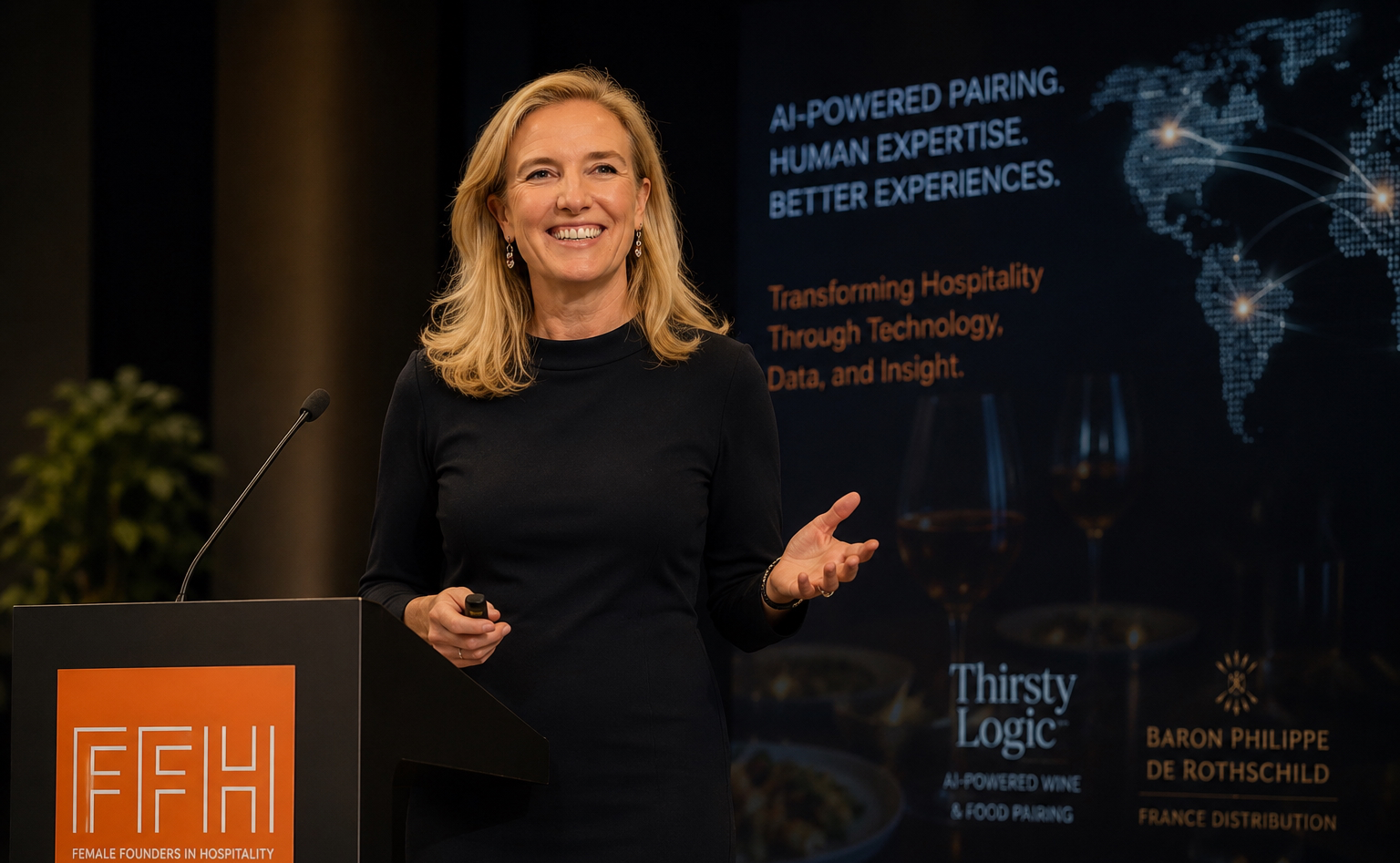
Technology, Data & the Future of Hospitality
Beverage Intelligence: The Next Frontier for AI
Artificial intelligence is transforming how organizations capture, scale, and apply knowledge. Yet one industry has remained remarkably dependent on human expertise and intuition: beverages.
Every day, millions of decisions are made about what to drink, what to pair with food, and how to create memorable hospitality experiences. I believe Beverage Intelligence represents the next stage in hospitality—combining structured expert knowledge, proprietary data, recommendation technology, and artificial intelligence to help people make better beverage decisions at scale.
“AI is making information abundant. Beverage Intelligence is about transforming deep beverage expertise into scalable intelligence that helps people make better decisions.”
Thirsty Logic
To bring this vision to life, I co-founded Thirsty Logic, an AI-enabled Beverage Intelligence Platform.
Built on proprietary datasets, structured expert knowledge, recommendation algorithms, and AI, the platform helps restaurants recommend the best beverages from their own lists, personalize guest recommendations, strengthen beverage programs, and increase revenue. The same intelligence can also help consumers discover beverages that better match their tastes, meals, and occasions.
Rather than replacing human expertise, the platform makes that expertise available at scale.
Why Beverage Intelligence Matters
Unlike most consumer decisions, beverage choices are highly contextual. The best recommendation depends on the food, the occasion, personal preferences, budget, and the beverages actually available.
Traditional ratings and reviews rarely answer the question people are really asking:
“Given this meal, these preferences, and the options in front of me, what am I most likely to enjoy?”
Answering that question requires more than information.
It requires structured expert knowledge.
By combining proprietary datasets, beverage expertise, recommendation algorithms, and AI, Beverage Intelligence can deliver recommendations that are more personal, more relevant, and more useful for consumers, hospitality businesses, and digital platforms.
Looking Ahead
Hospitality is only the beginning. Every industry contains deep domain expertise that has traditionally lived inside the minds of specialists. As AI reshapes every sector of the economy, the organizations that create enduring value will be those that know how to transform deep domain expertise into scalable intelligence—and ultimately into strategic assets.